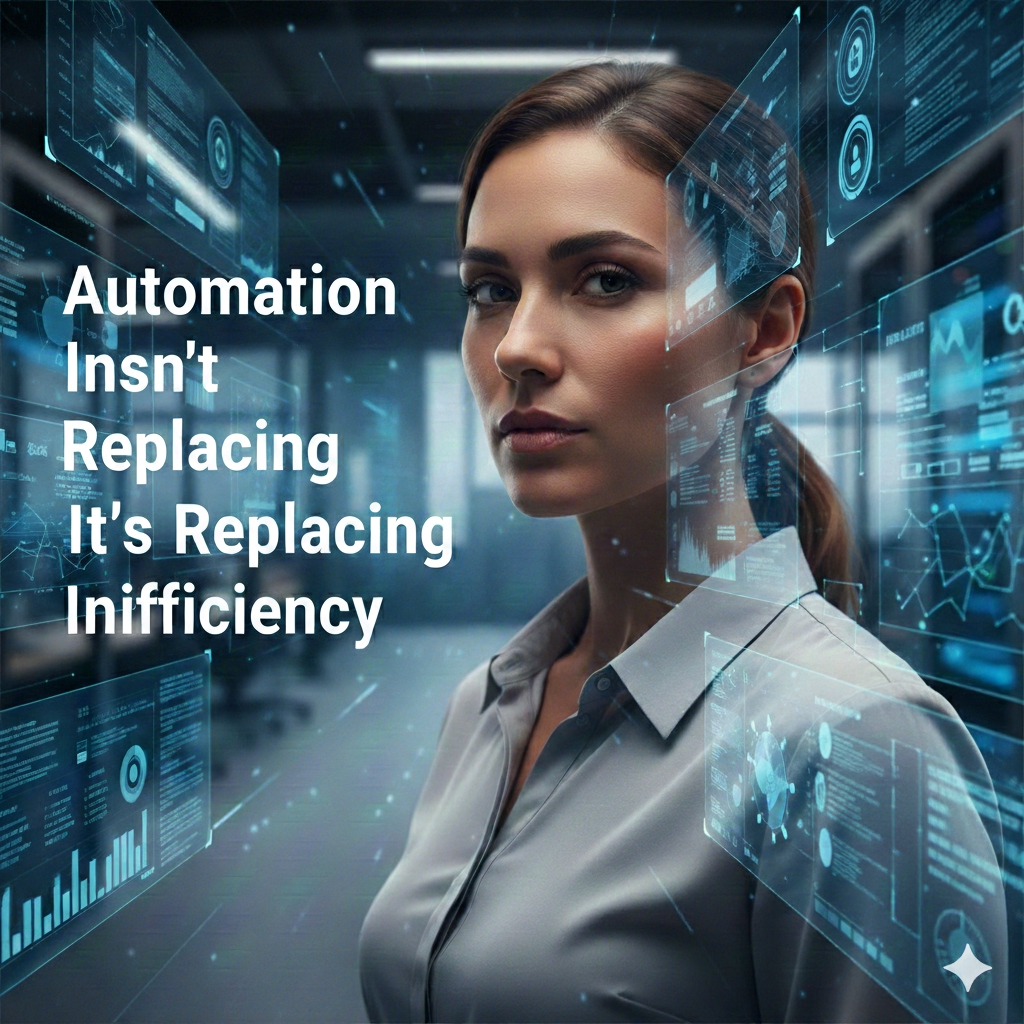
Whenever the word automation comes up, the first reaction is fear. People worry about losing jobs, becoming irrelevant, or being replaced by machines. This fear isn’t new. But if you look closely at what’s actually happening inside businesses today, automation is not replacing people. It’s replacing inefficiency.
Most companies aren’t struggling because they have too many people. They’re struggling because their people are spending time on work that shouldn’t require human effort in the first place.
Humans Are Still the Most Valuable Asset
People are great at thinking, creating, problem-solving, building relationships, and making decisions. What humans are not meant to do is repetitive, manual, rule-based work every single day. Automation gives employees more freedom, not less, by enabling them to focus on higher-level tasks.
Inefficiency Is Anticipated in Business, but Rarely Realized
Inefficiency may not be seen on an organization's financial statements, but it reduces profits. Inefficiency is a product of slow response times, missed sales lead follow-ups, mistakes created by human error, repeated work efforts and unconnected information systems.
Automation Helps to Fill These Gaps
Automation enables business processes to function smoothly, consistently and on time without requiring people to account for every individual item.
Automation Enables Employees to Be More Efficient
There is a mistaken belief that automation reduces the workforce. In fact, when an organization automates work processes, its workforce typically produces increased results. A sales team can follow up faster. A marketing team can execute larger campaigns. A support team can handle more inquiries with accuracy.
Automation doesn't just help organizations reduce headcount; It helps them scale by enabling them to operate more quickly, intelligently, and effectively.
An Enhanced Customer & Employee Experience
Automation helps customers enjoy faster responses and clearer communication. Employees experience reduced stress levels by avoiding menial tasks. This leads to increased employee satisfaction.
Automation Doesn’t Replace Judgment or Creativity
While technology allows for automating tasks, only humans possess the capabilities to create those parameters and interpret the results. Companies that achieve maximum benefit do not choose one over the other; they develop systems that enable both to work in concert.
Final Thought
Automation isn’t here to take jobs away. It’s here to take boring work away. When inefficiency is removed, people finally get the space to do what they do best. Businesses that understand this don’t fear automation. They use it as a tool to grow, innovate, and move faster in a world that never slows down.